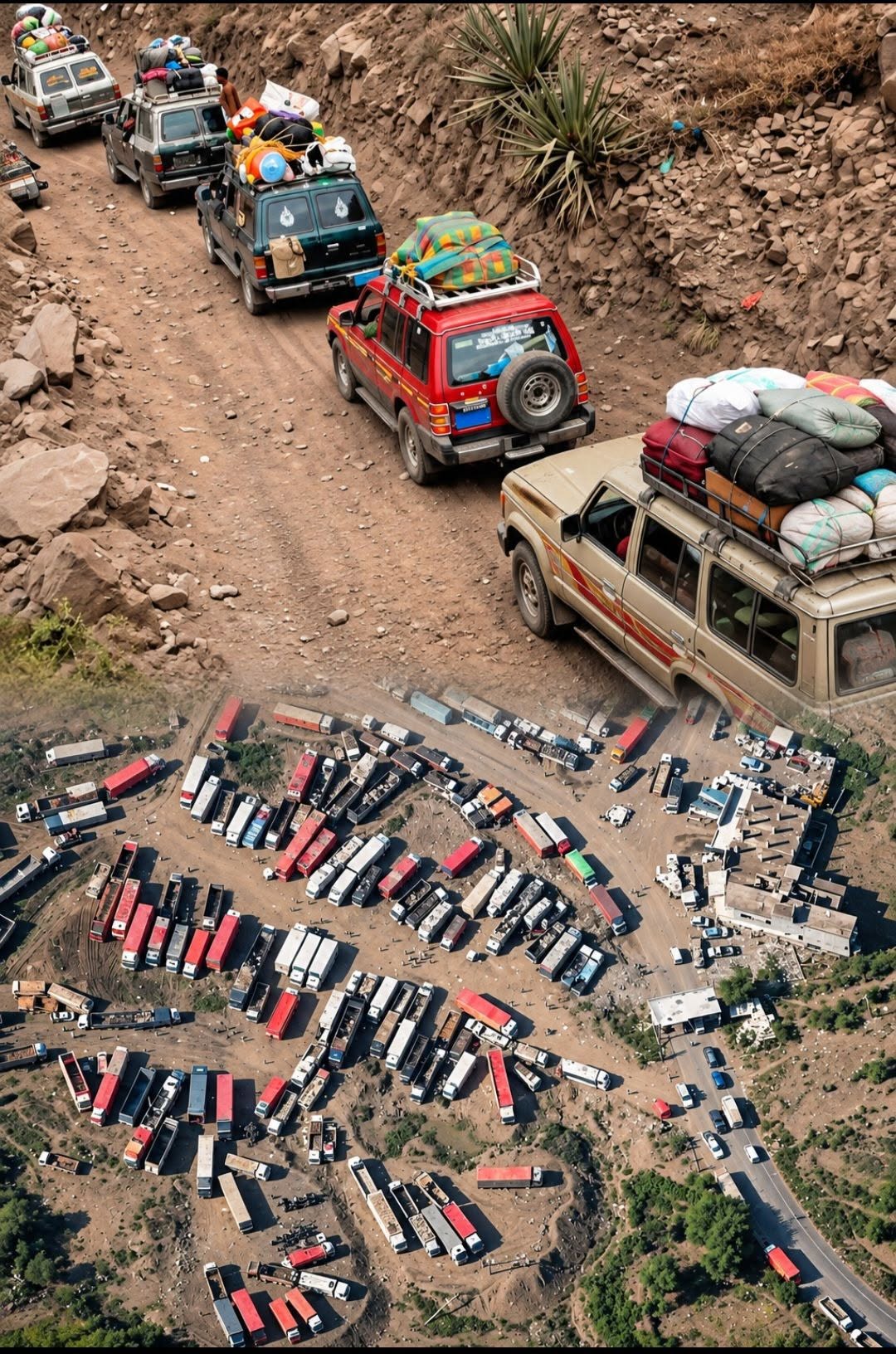
Irada: The Continued Siege of Taiz and the Deprivation of Food, Medicine, and Water to Civilians Constitute Grave Violations Requiring International Accountability
The Irada Organization against Torture and Enforced Disappearance condemns and denounces in the strongest possible terms the continued siege imposed on the city of Taiz by the Houthi militia, accompanied by a dangerous escalation in the closure of roads and vital access routes, the obstruction of food, medicine, water, fuel, and humanitarian aid deliveries, and the imposition of severe restrictions on the movement of civilians, in grave violation of international humanitarian law and fundamental human rights principles.
Irada Organization affirms that the continued siege of Taiz since 2015, particularly the unprecedented tightening of restrictions witnessed during October and November 2026, represents a dangerous policy that threatens the lives and safety of the civilian population and turns their most basic humanitarian needs into instruments of pressure and coercion. This comes at a time when residents are suffering from severe economic and humanitarian deterioration and the accelerating collapse of essential services.
First: The Siege of Taiz and the Deprivation of Civilians of the Essentials of Life
Irada Organization maintains that the closure of major roads and the obstruction of the normal flow of goods, food supplies, medicines, and petroleum products have exacerbated the population’s living and health conditions. These restrictions have driven up the prices of essential commodities, weakened families’ ability to meet their daily needs, and disrupted access to hospitals and medical facilities for patients and the wounded.
Irada Organization draws attention to warnings issued by United Nations agencies, which have confirmed that more than 800,000 people in Taiz have been affected by disruptions in access to humanitarian assistance, including over 600,000 people who depend on humanitarian aid. At the same time, water production has declined to approximately half its previous level, while the cost of water delivered by tanker trucks has risen to nearly three times its former price.
Irada Organization warns that the continuation of these restrictions threatens the lives of thousands of patients, children, women, and elderly people, increases the risks of malnutrition and the spread of disease, and places healthcare institutions at serious risk of being forced to suspend their life-saving services.
Second: Attacks on Vital Roads and the Exposure of Civilians to Isolation and Death
Irada Organization expresses its profound concern over attacks targeting vital roads and routes leading to Taiz, particularly the Hayjat Al-Abd Road, and the resulting disruption of the movement of travelers, cargo trucks, ambulances, and humanitarian relief convoys.
Irada Organization emphasizes that roads on which civilians depend for access to food, medicine, and water must not be targeted in violation of international humanitarian law. Likewise, military control over access routes must not be used as a pretext to deprive the population of its essential needs.
The Organization stresses that civilians must not be made to bear the consequences of armed conflict, nor should their lives, health, and freedom of movement be turned into instruments of military or political bargaining.
Third: Legal Characterization of the Siege and Associated Violations
Irada Organization affirms that restrictions imposed on the delivery of humanitarian relief, attacks against objects indispensable to the survival of the civilian population, and the obstruction of the passage of patients and humanitarian assistance constitute serious violations that may give rise to international criminal responsibility when the legal elements of crimes under international law are established.
Irada Organization stresses that the use of starvation of civilians as a method of warfare is prohibited under international humanitarian law and may constitute a war crime when its legal elements are satisfied. Furthermore, the imposition of collective punishment on civilian populations is absolutely prohibited.
The Organization further emphasizes that responsibility is not limited to the direct perpetrators of violations but may extend to commanders and officials who order, contribute to, or fail to prevent such violations or punish those responsible, in accordance with the applicable rules of law.
Fourth: Demands of Irada Organization
In response to these grave violations, the Irada Organization against Torture and Enforced Disappearance calls for the following:
1. The immediate and unconditional lifting of all unlawful restrictions imposed on the city of Taiz and the reopening of vital roads and access routes to ensure the safe, regular, and unhindered movement of civilians, goods, and humanitarian assistance.
2. Requiring the Houthi militia to cease attacks against roads, facilities, and civilian objects, and to refrain from any measures that could expose the population to starvation or deprive civilians of the essentials necessary for survival
3. Calling upon the United Nations, the Office of the United Nations High Commissioner for Human Rights (OHCHR), and the United Nations Special Envoy for Yemen to take urgent and concrete measures to ensure the protection of civilians, safeguard their freedom of movement, and guarantee unhindered access to humanitarian assistance.
4. Urging the International Committee of the Red Cross (ICRC) and international humanitarian organizations to intensify their emergency response and facilitate the delivery of medical supplies, food, and fuel to hospitals, dialysis centers, neonatal intensive care units, and water facilities.
5. Launching an independent and impartial international investigation into violations associated with the siege of Taiz, including attacks on vital roads, obstruction of humanitarian assistance, and harm inflicted upon civilians, with a view to identifying those responsible and holding them accountable.
6. Calling upon the international community and Member States of the United Nations Human Rights Council to move beyond expressions of concern and condemnation and take effective measures to protect the civilian population, prevent the continuation of violations, and ensure that those responsible do not enjoy impunity.
7. Referring documented cases of violations to the competent international mechanisms and considering legal measures against individuals responsible for grave violations, in accordance with international standards and applicable due process requirements.
Fifth: The Organization’s Position
The Irada Organization against Torture and Enforced Disappearance affirms that the siege of Taiz is not merely a temporary crisis affecting roads and supply routes. Rather, it is a fundamental human rights and humanitarian issue that directly affects the rights to life, health, food, water, freedom of movement, and human dignity.
The Organization further emphasizes that the silence of the international community, or its reliance solely on diplomatic statements without taking practical measures to protect civilians, risks leaving hundreds of thousands of residents exposed to further suffering and violations.
Irada Organization renews its call for urgent international action to end the siege, ensure the delivery of humanitarian assistance, protect civilians, and hold those responsible for violations accountable, in order to prevent their recurrence and bring an end to the suffering of the people of Taiz.
The siege of civilians and the deprivation of food, medicine, and water cannot be justified by any military or political considerations. The lives, dignity, and rights of the people of Taiz are not bargaining chips to be used in negotiations or political and military deals.
Issued by:
Irada Organization against Torture and Enforced Disappearance 20 November 2026 – Republic of Yemen