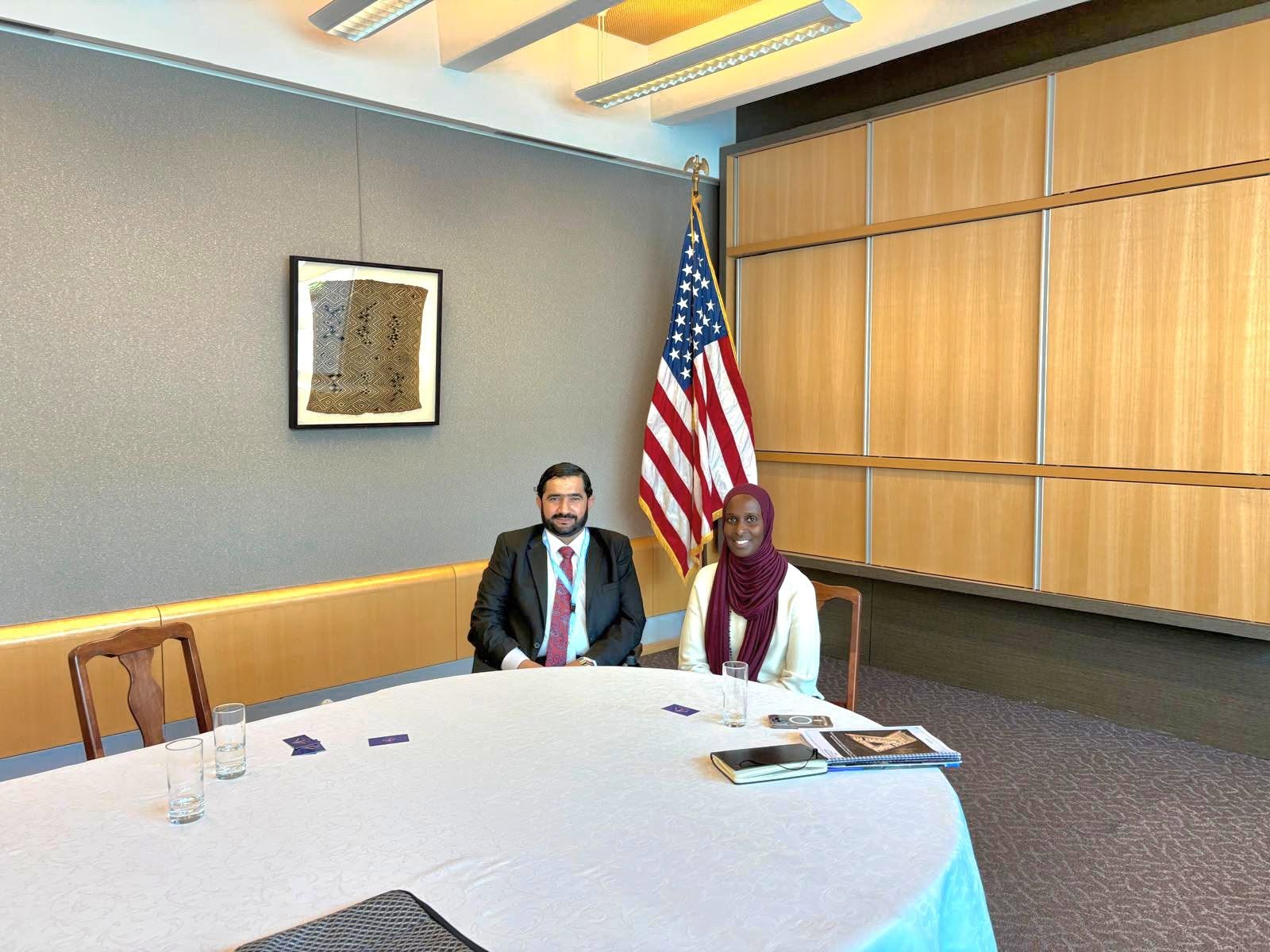
Irada Organization Discusses Human Rights Developments in Yemen with the U.S. Mission in Geneva
Geneva, Switzerland – 21 September 2026
Sheikh Jamal Al-Maamari, President of the Irada Organization against Torture and Enforced Disappearance, held a meeting with Ms. Shamis Mohammed, representative of the Permanent Mission of the United States of America for Human Rights to the United Nations in Geneva, at the U.S. Embassy premises.
The meeting addressed the latest developments in the human rights situation in Yemen, violations against civilians, and the situation of arbitrarily detained persons, abductees, forcibly disappeared persons, and victims of torture, as well as recent developments on the ground and the humanitarian situation.
Sheikh Jamal Al-Maamari, President of Irada Organization, presented the violations documented by the Organization during the recent Houthi military escalation in the governorates of Taiz and Hodeidah, including the killing and injury of civilians, forced displacement and large-scale displacement, and the destruction of civilian property and infrastructure. He also addressed attacks on internally displaced persons’ camps in Marib Governorate using ballistic missiles and drones.
The President of Irada Organization handed the representative of the U.S. Mission three human rights reports containing monitoring and documentation findings, testimonies, and information concerning serious violations allegedly committed by the Houthi militia against civilians, foremost among them arbitrary detention, enforced disappearance, torture, forced displacement, recruitment of children, laying of landmines, and the demolition of homes.
The meeting also addressed the continued abduction of humanitarian workers, restrictions imposed on their activities and on the delivery of assistance to those in need, as well as allegations of looting and seizure of humanitarian aid by the Houthis.
Irada Organization also presented recent developments on the ground, including the extension of Houthi control over large sections of the coastal strip as far as the Dhubab area near the Bab al-Mandab Strait. The Organization reported that the military operations were accompanied by serious violations, including the killing of civilians, violations against persons not taking part in hostilities, the destruction of civilian property and infrastructure in the areas of Mocha, Hays, and Al-Kadhah, and the forced displacement of residents.
Irada Organization warned of the humanitarian and security repercussions of this escalation and the threats it poses to peace, food security, and regional and international security, particularly in areas adjacent to the Bab al-Mandab Strait and international maritime routes. It stressed the need to investigate violations, hold those responsible accountable, and ensure the protection of civilians in accordance with international law.
The President of Irada Organization reviewed the Organization’s efforts to monitor and document violations and to follow up on the cases of arbitrarily detained persons, abductees, forcibly disappeared persons, and victims of torture since the Houthis took control of the capital, Sana’a, on 21 September 2014.
He noted that work continues to trace the fate of forcibly disappeared persons and those held in prisons and secret detention facilities, prepare detailed case files concerning violations and those allegedly responsible for them, and preserve evidence and testimonies in a manner that strengthens prospects for legal accountability and helps prevent impunity.
He emphasized that the continuing state of “no war, no peace” over the past years has neither ended the suffering of civilians nor brought an end to violations. Rather, he stated, it has given the Houthis sufficient time for military preparations and for “attempts to impose sectarian change and reshape the religious and sectarian identity of the population.” He stressed that any peace process must place victims’ rights at the forefront of its priorities and must include the unconditional release of detainees and abductees, disclosure of the fate and whereabouts of forcibly disappeared persons, an end to the recruitment of children and the laying of landmines, and guarantees of victims’ rights to justice, effective remedy, reparation, and accountability for those involved in human rights violations.
Irada Organization affirmed that it will continue its monitoring and documentation activities, advocacy for victims’ rights, and cooperation with United Nations international mechanisms, diplomatic missions, and human rights organizations, with the aim of strengthening accountability, securing justice for victims, and ensuring that perpetrators of human rights violations do not enjoy impunity.
Issued by Irada Organization against Torture and Enforced DisappearanceMonday, 21 September 2026 – Geneva, Switzerland