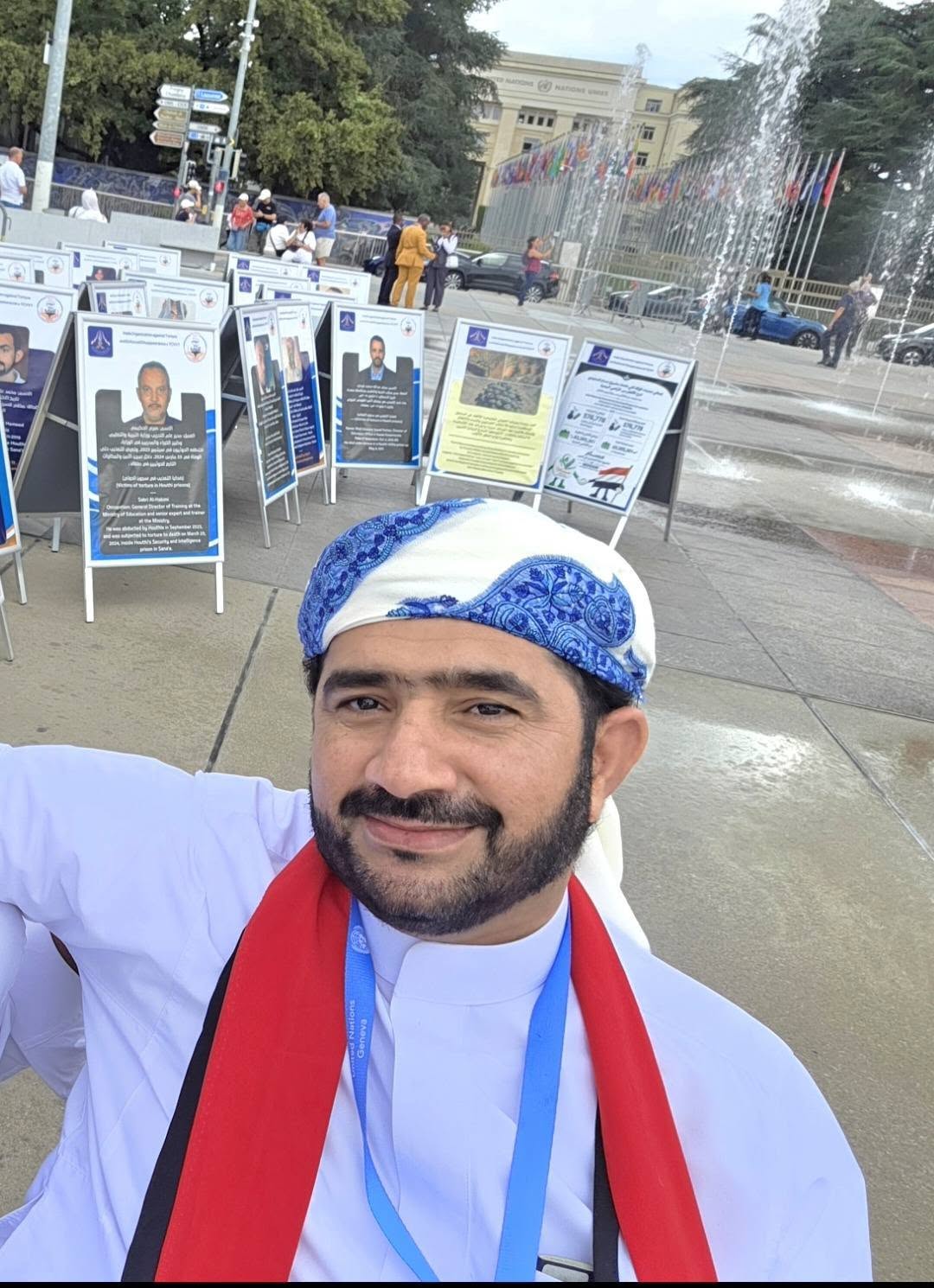
A Photo Exhibition in United Nations Plaza in Geneva Documents Houthi Violations Against Civilians in Yemen
Geneva, Switzerland | September 16, 2026
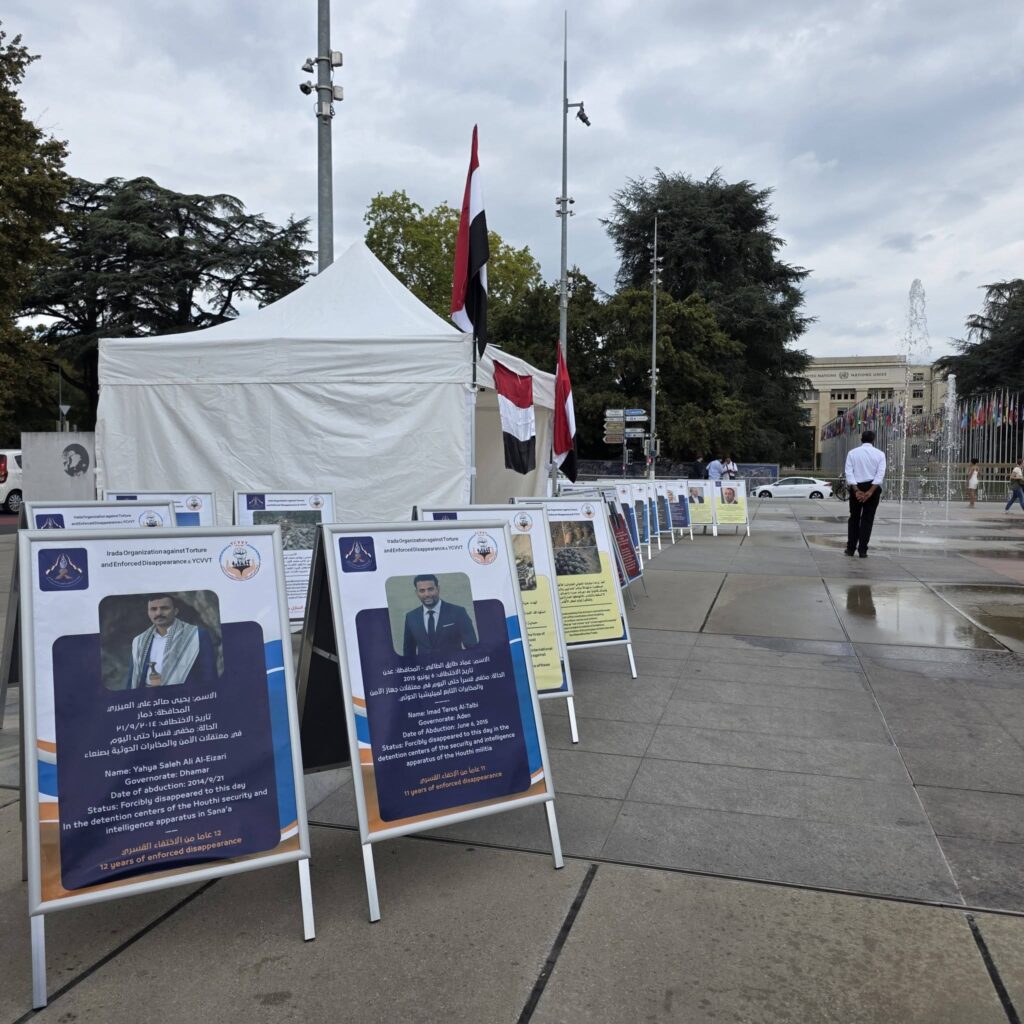
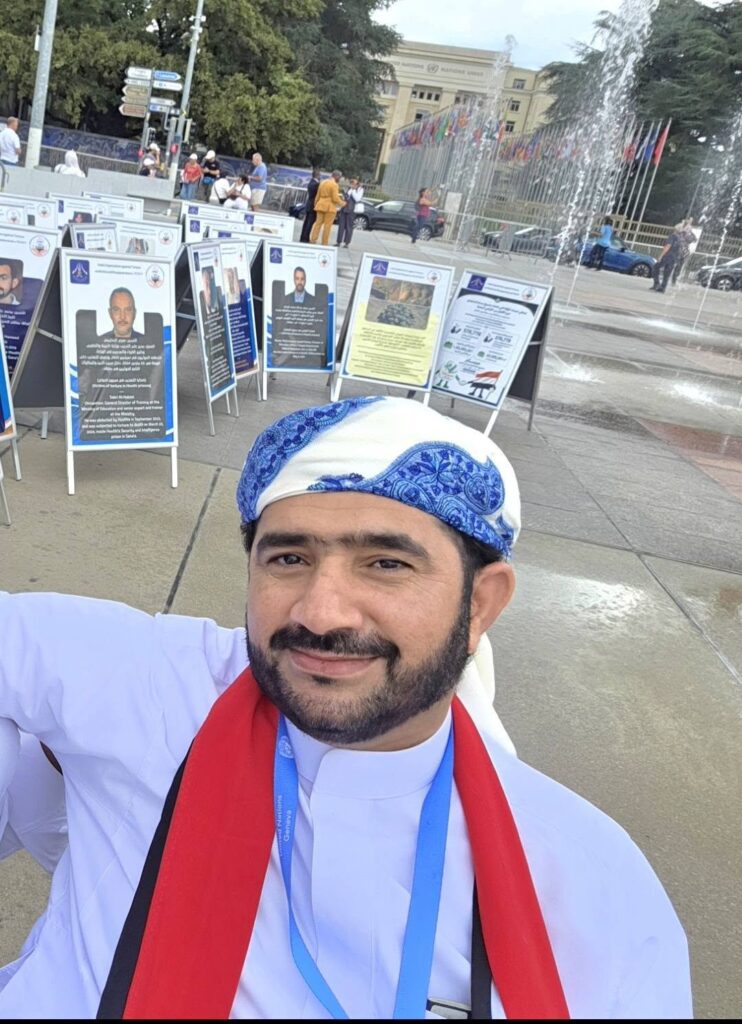
As part of a human rights initiative aimed at bringing the voices of Yemeni victims to the international community, Irada Organization against Torture and Enforced Disappearance, in cooperation with the Yemeni Center for the Rehabilitation of Victims of Violations and Torture, held a photo exhibition today, Wednesday, September 16, 2026, in United Nations Plaza in Geneva, in front of the Broken Chair monument, to document aspects of the violations suffered by civilians in Yemen, based on the documentation materials presented by the organizers.
The exhibition was held at one of the most prominent symbolic locations associated with the issues of victims of violence and landmines and efforts to combat torture. It sought to convey the testimonies and suffering of victims directly to the international community and to draw the attention of visitors and human rights advocates to the continuing humanitarian consequences of the conflict in Yemen.
Photographs Documenting the Suffering of Civilians
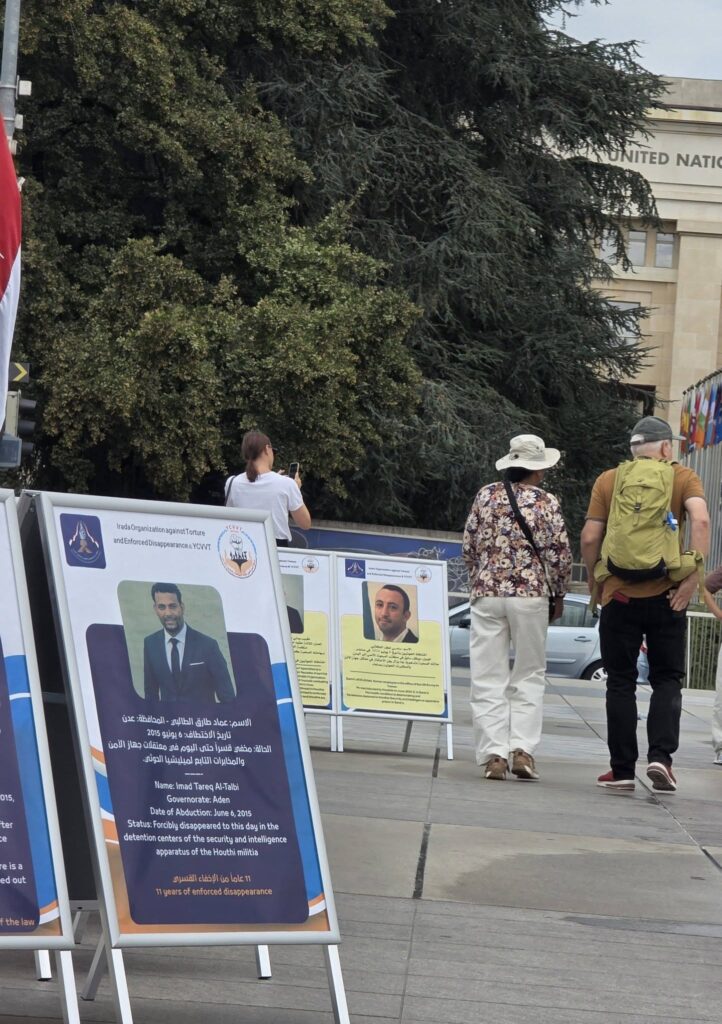
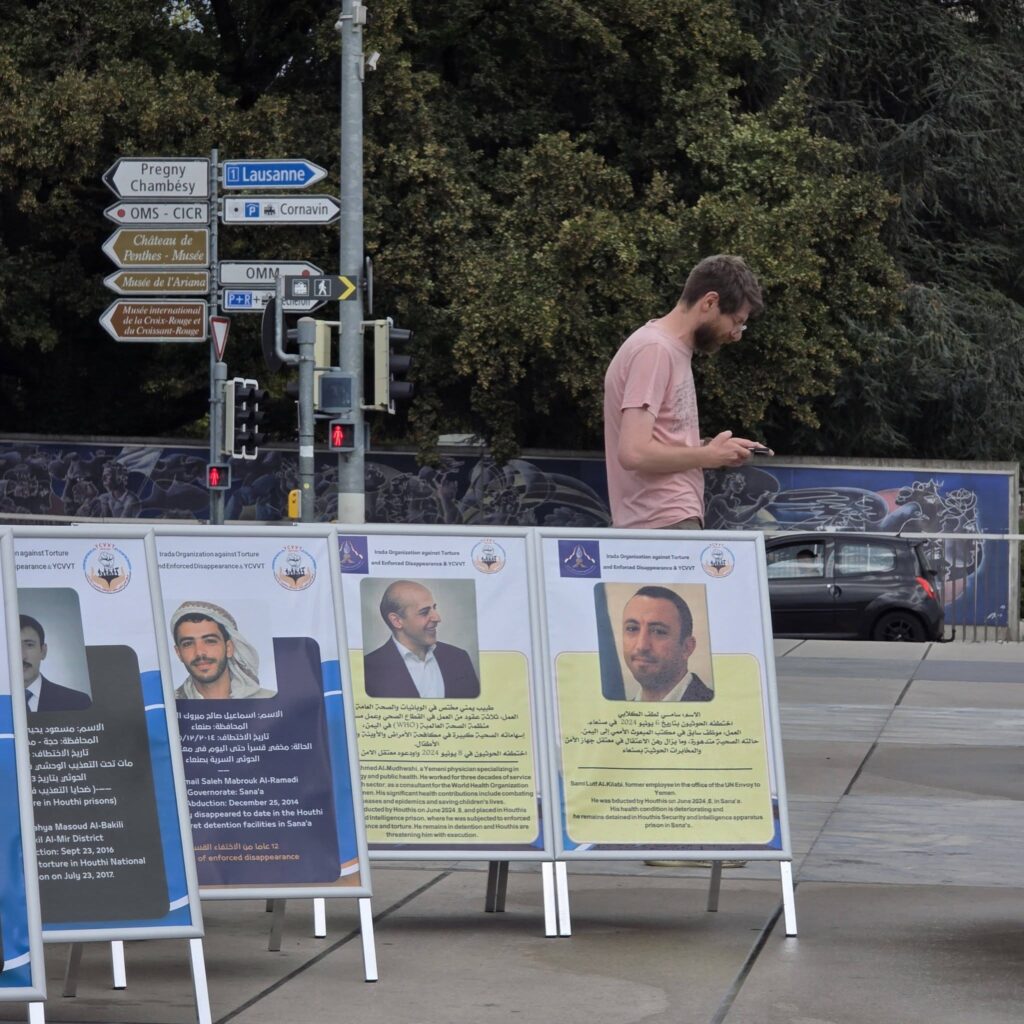
The exhibition featured a large collection of photographs and documentary materials printed in A1 format, covering cases and violations that the organizers stated had been committed against Yemeni civilians by the Houthi militia.
The materials were presented in both Arabic and English, enabling visitors from different nationalities and backgrounds to learn about the human rights cases and files presented at the exhibition.
The exhibition focused on six main files:
First: Victims of Enforced Disappearance — Men and Women
The photographs on display documented cases of individuals who had been subjected to enforced disappearance and whose fate remains unknown to this day.
They remain detained in secret Houthi detention centers.
Among them are Yahya Saleh Al-Eizari, Fawzi Obaid, Imad Al-Talibi, Ismail Al-Ramadi, Ali Ahmed Fallat, Ahmed Mohammed Al-Zakari, the abducted woman Fatima Al-Arwali, and hundreds of other disappeared persons held by the Houthi Security and Intelligence Service.
The exhibition highlighted the suffering experienced by the families of disappeared persons amid the absence of information concerning the whereabouts and fate of their relatives, and the resulting long-term humanitarian, psychological, and social consequences.
Second: Victims of Torture and Ill-Treatment
The exhibition presented cases of victims who were subjected to torture resulting in death, including the abductees Masoud Al-Bukaili, Sabri Al-Hakimi, Mohammed Khamash, Mohammed Al-Naseem, Mohammed Tufayan, and others.
The materials also addressed the physical and psychological effects left by torture and severe ill-treatment on detainees and their families, and the serious violations of fundamental human rights represented by such practices.
The materials also addressed the physical and psychological effects left by torture and severe ill-treatment on detainees and their families, and the serious violations of fundamental human rights represented by such practices.
Third: Victims of Landmines
The exhibition devoted a section to documenting landmine victims and highlighting the continuing danger posed by landmines and explosive remnants of war to the lives of civilians in Yemen.
The materials on display addressed cases involving disability, as well as the effects that landmines have on the lives of families and local communities, particularly in residential and agricultural areas and along routes used by civilians. Among the cases presented was that of the victim Abdulwahid Wafi.
Fourth: Child Victims
The exhibition addressed violations committed against children by members of the Houthi militia, including cases involving the abduction and detention of children under the age of majority, such as the child Mohammed Al-Mashdali, the child Hussein Al-Barq, and the child Mohammed Al-Tayyabi.
These children have remained detained for years, with the period of detention in some cases exceeding seven years.
The exhibition highlighted the humanitarian, psychological, and social effects that children may experience as a result of abduction and detention, seeking to demonstrate the extent of the suffering inflicted upon one of the most vulnerable groups in Yemeni society.
Fifth: Blowing Up Homes and Destruction of Property
The photographs presented cases documenting the blowing up and destruction of homes in several Yemeni governorates, resulting in families losing their homes and property.
The materials also highlighted the humanitarian and social consequences of these practices, including displacement and the loss of housing, stability, and livelihoods, as well as the additional burdens imposed on affected families.
Sixth: Landmine Laying and Demining Efforts
The exhibition also addressed the issue of landmine laying and its long-term risks to civilians, alongside humanitarian efforts aimed at removing landmines and addressing their consequences.
According to materials presented by the organizers, the Houthi militia has laid large numbers of landmines in various parts of Yemen, with the number estimated at more than one million mines. The organizers stated that these mines pose an ongoing threat to civilians.
The exhibition also highlighted efforts to clear landmines, foremost among them the Saudi MASAM Project, which has cleared more than half a million landmines. It also highlighted the role of demining activities in saving lives, protecting civilians, and reopening roads and affected areas to residents.
The organizers emphasized that the majority of landmine victims are civilians, including women and children, and that the effects of landmines are not limited to injuries, deaths, and disabilities, but also extend to disrupting livelihoods and movement and restricting access to agricultural land and essential services.
Direct Briefings for Visitors
Sheikh Jamal Al-Maamari, President of Irada Organization against Torture and Enforced Disappearance and President of the Yemeni Center for the Rehabilitation of Victims of Violations and Torture, explained the contents of the exhibition to visitors, presenting the backgrounds of several of the cases on display, the nature of the violations addressed in the documentary materials, and the effects they had on victims and their families.
Dr. Mujeeb, Relations Officer at Irada Organization against Torture and Enforced Disappearance, also provided visitors with detailed explanations of the human rights and humanitarian files addressed by the exhibition, discussing aspects of the suffering of Yemeni civilians and the humanitarian and social consequences resulting from the violations documented in the materials on display.
A Message from the Victims to the International Community
The exhibition was not limited to displaying photographs. According to the organizers, it sought to transform individual cases into living testimonies reminding the international community that the effects of violations do not end when the incident itself ends, but continue to affect victims’ families and local communities for many years.
The organizers stated that holding the exhibition in United Nations Plaza in Geneva aims to provide victims with a space to convey their voices to international institutions, diplomatic missions, and human rights organizations, and to emphasize the need to place civilian protection and accountability for perpetrators of violations among the priorities in addressing the Yemen issue.
Human Rights Demands
In light of the files addressed by the exhibition, the organizing bodies renewed their call for human rights and legal measures, most notably:
1. Revealing the fate of all persons subjected to enforced disappearance and enabling their families to learn the fate and whereabouts of their relatives.
2. Ending all forms of torture and severe ill-treatment and conducting serious investigations into allegations concerning such practices.
3. Protecting civilians from the dangers of landmines and explosive remnants of war.
4. Strengthening demining programs and mine-risk awareness, providing support and care for landmine victims, and recognizing that the indiscriminate laying of landmines in civilian areas constitutes a grave war crime under international humanitarian law and relevant international law.
5. Protecting children from abduction, detention, and all other violations related to armed conflict.
6. Protecting civilian homes and property and respecting the rules of international humanitarian law.
7. Providing medical and psychological care and rehabilitation programs for victims, survivors, and their families.
8. Conducting independent and transparent investigations into documented violations, legally prosecuting those responsible for the violations, and ensuring the preservation of evidence relating to them.
9. Ensuring accountability, reparations, and redress for victims in accordance with international legal standards.
The exhibition concluded its message by emphasizing that documenting violations is an essential step toward preserving the memory of victims, confronting impunity, and keeping the suffering of Yemeni civilians before the international community until justice is achieved and victims receive redress.
https://youtu.be/5j-CkUZPTLw?si=Xl9-xVwJSlBxvg5o