IRADA Org Participates in Human Rights Seminar in Geneva
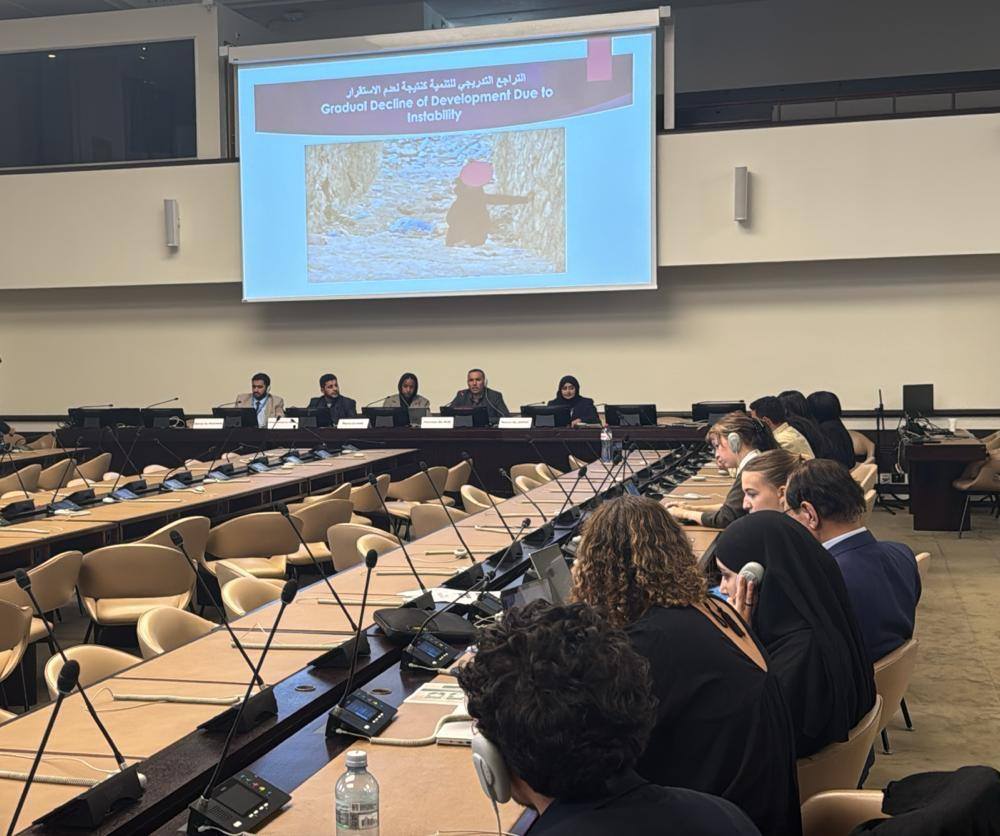
On the sidelines of the 60th Session of the Human Rights Council, Irada Organization against Torture and Enforced Disappearance and the Yemeni Center for the Rehabilitation of Victims of Violations and Torture (YCVVT) participated in a seminar organized by the development Forum for Dialogue and Human Rights, titled:“The Impact of Armed Conflict on the Right to Development – Yemen as a Case Study.
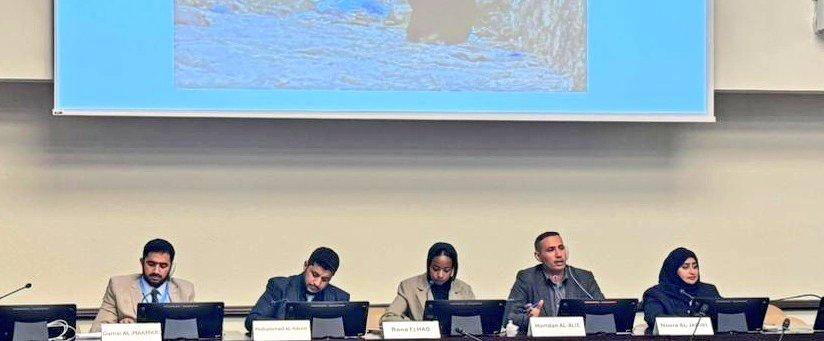
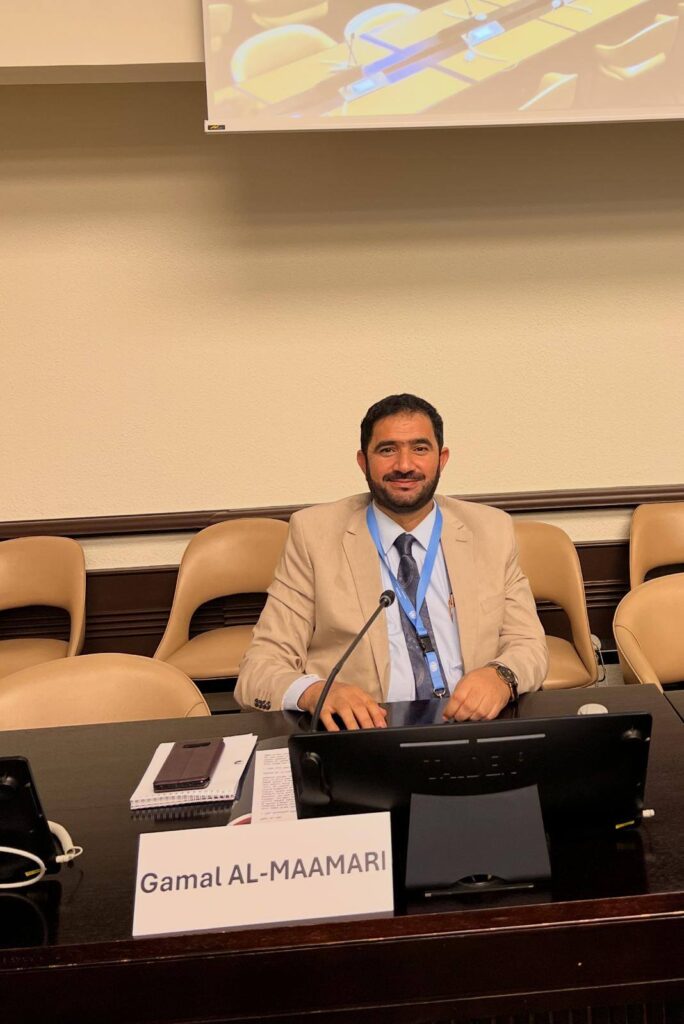
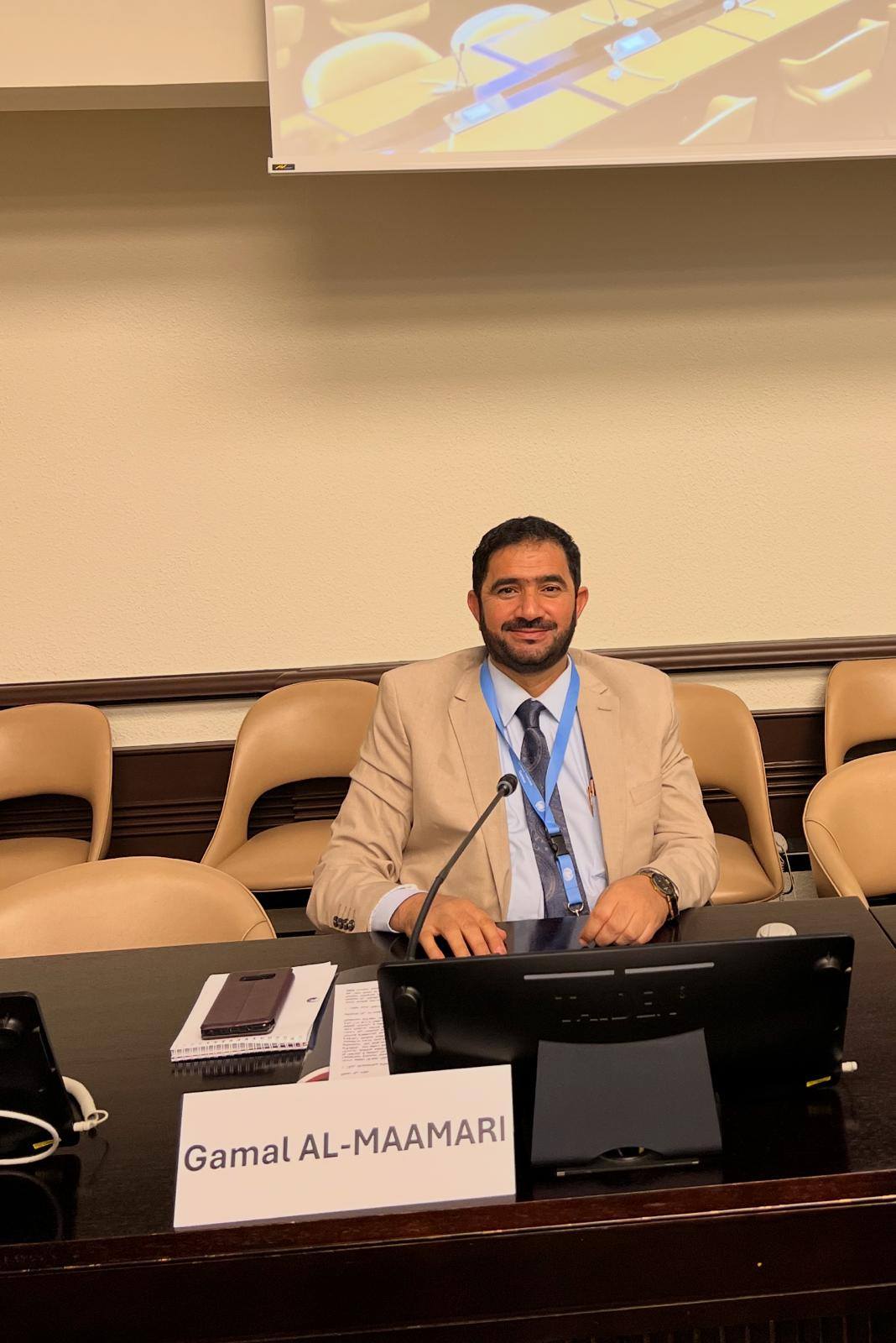
”During the seminar, Irada Org Chief, Sheikh Gamal Al-Maamari, presented two main topics concerning landmine victims and those who have been abducted or forcibly disappeared.
First Topic: Landmines and Their Impact on Development:
Sheikh Al-Maamari affirmed that international law prohibits the use of anti-personnel landmines under the 1997 Ottawa Treaty. However, Houthis’ militia has planted hundreds of thousands of landmines indiscriminately in civilian areas, farmlands, roads, and near water wells, causing massive human and material losses.
He pointed out that Houthi-planted mines pose a double threat, as they are unmarked and scattered without maps, making their clearance extremely difficult and costly. This has severely hindered reconstruction and development efforts, turning vast areas of fertile land into abandoned zones and depriving communities of their livelihoods and water sources, further exacerbating poverty and food insecurity.
Sheikh Al-Maamari also highlighted that the Saudi “Masam” Project remains the most significant initiative in clearing Yemeni territories of landmines since 2018, in the absence of any effective local efforts.He concluded that landmines continue to pose a lasting threat to peace and development in Yemen and that addressing this danger requires comprehensive international cooperation and both governmental and societal support.
Second Topic: Enforced Disappearance and Arbitrary Detention:
Sheikh Al-Maamari explained that enforced disappearance represents one of the gravest violations of human rights and is classified as a crime against humanity under the 2006 International Convention, as it violates the right to liberty and personal security and undermines the rule of law.
He noted that enforced disappearance and arbitrary detention have led to:
1. Depletion of Human Capital:
Houthis’ militia practices have resulted in the disappearance of thousands of academics, professionals and workers in vital sectors within secret detention centers, leading to the deterioration of education, health and economic sectors and a sharp decline in human development indicators.
2. Social and Psychological Impacts:
These violations have left deep scars on families and communities, including family breakdown, rising poverty rates, and the spread of psychological trauma, particularly among women and children.Irada Org’s report issued on September 29, 2025, documented 1,969 forcibly disappeared persons in Sana’a, including 203 women, held in identified secret detention sites.
3. Undermining Justice and Development:
Enforced disappearance erodes public trust in institutions and destroys the foundations of justice, posing a major obstacle to peace and sustainable development.
Other Contributions:
Several participants also presented papers during the seminar, including:
Journalist Mohammed Mahdi, who discussed the targeting of education, highlighting the conversion of schools into military barracks and weapons depots, the politicization of curricula and the replacement of teaching staff. He called for depoliticizing education and classifying attacks on it as war crimes.
Journalist Hamdan Al-Ali’i reviewed how Houthis have obstructed development since taking control of state institutions, noting that the war has set Yemen back 21 years on the Human Development Index (UNDP Report, 2019).
Human rights activist Noura Aljrowi presented a paper on the economic and social marginalization of women, stressing that depriving girls of education and employment undermines half of society’s productive capacity and drains peacebuilding and reconstruction efforts of their potential.
Researcher Ranaa Al-Haj stated in her paper that “Yemen is not merely facing a humanitarian crisis, but a complete collapse of the development trajectory, depriving entire generations of a dignified future.
”Friday, Oct 4, 2025Geneva, Switzerland